
Language is a beautiful playground where words dance between innocence and innuendo. Double meaning phrases—those clever linguistic acrobats—have been tickling funny bones for centuries. From Shakespeare’s saucy banter to modern memes, these double entendre words prove that context is everything. Whether you’re exploring double meaning slang words, crafting double meaning sentences, or enjoying a play on words using double meaning for fun, you’ve found the ultimate collection. This treasure trove features funny words with double meanings and hilarious double meaning examples that’ll have you laughing, groaning, and thinking twice before using certain phrases in polite company. Get ready to explore phrases that mean one thing on the surface but whisper something entirely different underneath!
🎭 What Are Double Meaning Phrases? The Art of Linguistic Mischief
Double meaning phrases, or “double entendres” (fancy French for “double meaning”), are expressions that carry two distinct interpretations—one typically straightforward and innocent, the other usually suggestive or humorous. This literary device dates back centuries, with roots in medieval literature and flourishing during the Renaissance when playwrights like Shakespeare mastered the art of sneaking naughty jokes past censors.
The term “double entendre” itself emerged in the 17th century, though the English eventually dropped it from their own language while keeping the concept alive and thriving. The French now use “double sens” instead, but we English speakers clung to the original phrase like a linguistic souvenir. These clever constructions work because of semantic ambiguity—where context, tone, and delivery transform innocent words into comedy gold.
What makes double entendres so enduringly popular? They’re the perfect cocktail of wit, timing, and that delicious feeling of “getting it” while others might not. They require just enough mental gymnastics to make you feel clever when you catch them, creating a shared moment of understanding between speaker and audience. From Chaucer’s Canterbury Tales to modern sitcoms, the double entendre has been humanity’s favorite way to say something without really saying it.
Classic examples throughout history:
- Shakespeare’s “Much Ado About Nothing” (where “nothing” was Elizabethan slang for female anatomy)
- Mae West’s famous line: “Is that a gun in your pocket, or are you just happy to see me?”
- Medieval court jesters who could mock nobility through “innocent” wordplay
- Victorian literature’s obsession with “swooning” and “overcome with emotion”
🔥 Double Entendre Words List: Top 50 Funny Ones
Single words can pack a powerful punch when they carry dual meanings. These versatile vocabulary villains are perfect for creating those “wait, what?” moments in everyday conversation. From workplace water cooler talk to casual texting, these words navigate the line between professional and playful with remarkable agility.
• “Nuts” – Could mean crazy, could mean testicles, could mean those crunchy snacks you’re definitely talking about at the office party.
• “Come” – The verb that launched a thousand awkward conversations and makes every invitation sound questionable.
• “Hard” – Whether describing difficulty, texture, or… well, you know—this word works overtime in every context.
• “Bang” – Explosive sound effect or bedroom activity? Your grandmother’s hairstyle or a wild night? The ambiguity is chef’s kiss.
• “Screw” – A fastener, a drink, or a verb that gets more interesting depending on who you’re talking to.
• “Tool” – Workshop essential, insult for annoying people, or anatomical reference—it’s the Swiss Army knife of double meanings.
• “Blow” – Wind activity, trumpet technique, or that thing that makes birthday candles go out (we’re keeping it innocent here, folks!).
• “Wood” – Trees, morning phenomena, or what you’re collecting for the fireplace—totally just the fireplace.
• “Prick” – A tiny puncture wound, a term for jerks, or… you can fill in the blank on this one.
• “Load” – Laundry burden, ammunition quantity, or something you definitely mean in a completely professional capacity.
• “Sack” – Bag for groceries, getting fired from your job, or medieval pillaging—the context matters so much.
• “Spread” – Butter application, bedroom positioning, or how you arrange your picnic feast (definitely the picnic).
Read more: 145+ Banana Puns & Jokes: You’re One Smart Cookie!
🗣️ Double Meaning Slang Words: Urban & Everyday Examples
Street slang thrives on double meanings, creating a secret language that shifts faster than fashion trends. These expressions often emerge from specific communities before infiltrating mainstream vocabulary, bringing their hidden layers with them. What makes urban slang particularly rich is how it builds plausible deniability into everyday phrases—you can say something spicy while maintaining complete innocence.
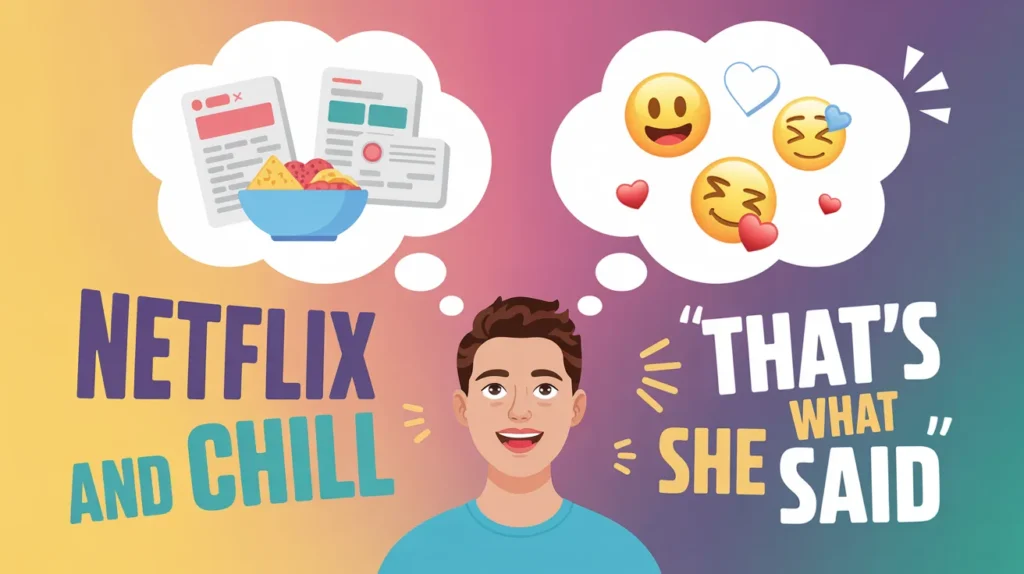
• “Netflix and chill” – The phrase that ruined innocent streaming invitations forever; nobody’s actually watching the movie, and we all know it.
• “Smash” – Video game competition or romantic encounter? The controllers aren’t the only things getting button-mashed in this scenario.
• “Thirsty” – Need for hydration transformed into desperate attraction; when someone’s this thirsty, water won’t help.
• “Cake” – Birthday dessert or bodacious backside; this bakery has a very specific specialty item everyone’s ordering.
• “Snack” – Light meal or attractive person; when someone’s looking like a snack, you’re not thinking about chips.
• “Daddy” – Father figure or… well, the internet ruined this one completely; Father’s Day cards got real awkward real fast.
• “Peach” – Fuzzy fruit or emoji that represents something quite different; the produce section has never been the same.
• “Eggplant” – Purple vegetable that somehow became the universal symbol for male anatomy; vegetarians are having a crisis.
• “Slide into DMs” – The modern mating call disguised as innocent social media messaging; nobody’s sliding anywhere appropriate.
• “Lit” – Something on fire, drunk, or incredibly exciting; when the party’s lit, multiple meanings apply simultaneously.
• “Bussin'” – Delicious food or something impressively good; but let’s be honest, the double meaning makes everything sound inappropriate.
• “Clap” – Applause, disease reference, or… physical activities; standing ovations have never been more complicated.
🎬 Double Meaning Examples in Pop Culture & Movies
Hollywood loves a good double entendre—it’s how writers smuggle adult humor past ratings boards and into family-friendly content. From animated classics to blockbuster franchises, filmmakers have mastered the art of creating jokes that sail over kids’ heads while landing squarely in adult territory. These moments create a shared experience: children laugh at the surface gag while parents appreciate the hidden layer, making movies rewatchable with entirely new perspectives.
• Shrek’s “compensation” joke – Lord Farquaad’s towering castle leads Shrek to quip about overcompensation; short kings everywhere felt that burn.
• Austin Powers’ “Swedish-made penis enlarger” – The entire franchise is basically a double entendre festival; “that’s not mine, baby” never convinced anyone.
• Toy Story’s “Buzz” Lightyear – Woody tells Buzz “you’ve got a friend in me” while dealing with jealousy; the entire dynamic is ripe for reinterpretation.
• Who Framed Roger Rabbit’s Jessica – “I’m not bad, I’m just drawn that way” while her entire character oozes suggestiveness; animation gave censors a real headache.
• The entirety of Deadpool – When your superhero constantly breaks the fourth wall, every sentence is weaponized wordplay.
• Harry Potter’s “wand” references – “It’s not the wand, it’s the wizard” takes on new meaning; those dueling scenes hit different now.
• James Bond’s “Bond, James Bond” – Every mission includes a martini “shaken, not stirred” and innuendo stirred, not shaken; 007 has a license to thrill in multiple ways.
• Mean Girls’ “Is butter a carb?” – The whole movie weaponizes teen girl language; “she doesn’t even go here” applies to context too.
• The Princess Bride’s “As you wish” – Westley’s signature phrase means “I love you”; true love speaks in code.
• Mrs. Doubtfire’s “Help is on the way, dear!” – Robin Williams in drag created layers of meaning; that whole movie is a double entendre masterclass.
😂 Double Meaning Sentences: Hilarious Twists
Complete sentences offer even more opportunities for mischief, where innocent statements transform into comedy gold with just a slight shift in perspective. These phrases are perfect for that friend who loves making everything sound inappropriate or for understanding why your coworker just snorted coffee through their nose during a meeting.
• “I need you to come to my office” – Professional request or spicy invitation? HR would like a word about proper phrasing.
• “That’s what she said” – Michael Scott’s legacy ruined innocent statements forever; every verb became suspicious after The Office.
• “Let me slip into something more comfortable” – Could be pajamas, could be lingerie; either way, things are getting cozy.
• “I’m good with my hands” – Carpentry skills or bedroom prowess? The job interview just got interesting.
• “Want to see my etchings?” – Classic Victorian pickup line disguised as art appreciation; nobody was ever actually looking at etchings.
• “I’ll show you mine if you show me yours” – Playground trading cards or adult negotiations; childhood innocence can’t be recovered.
• “Size doesn’t matter” – The most reassuring lie ever told; context determines whether we’re talking about apartments or anatomy.
• “I’m coming!” – Response to someone calling you or something else entirely; timing and tone make ALL the difference.
• “Do you want it hard or soft?” – Discussing eggs, mattresses, or romance novels; breakfast conversations require careful navigation.
• “I’ve got a package for you” – Delivery service or pickup line? The UPS guy never means it that way, but still.
• “Let’s do it together” – Teamwork exercise or intimate suggestion; group projects suddenly sound scandalous.
• “I need it now” – Urgent work request or desperate plea; the exclamation point changes everything.
Related: 99+ Starbucks Jokes & Puns: Sip Back & Latte Fun!
🎪 A Play on Words Using Double Meaning for Fun (Puns & Jokes)
Puns and double entendres are comedy cousins—both rely on linguistic flexibility to create humor. The best jokes dance on the edge of appropriateness, letting the audience’s mind do the heavy lifting. These setups demonstrate how a simple twist of phrase can transform innocent observations into memorable one-liners.
• “I used to be a banker, but I lost interest” – Financial services and boredom collide; career changes never sounded so clever.
• “The midget fortune teller who escaped from prison was a small medium at large” – Triple threat wordplay achievement unlocked; size, psychic abilities, and fugitive status in one go.
• “I’m reading a book about anti-gravity—it’s impossible to put down!” – Physics meets addiction; science humor hits different.
• “Why don’t oysters donate to charity? Because they’re shellfish” – Marine life meets moral judgment; the ocean called, it wants its pun back.
• “I used to hate facial hair, but then it grew on me” – Personal grooming meets acceptance; patience and follicles triumph.
• “The man who survived both mustard gas and pepper spray is a seasoned veteran” – Military service meets culinary terminology; flavored heroism.
• “I’m terrified of elevators, so I’m taking steps to avoid them” – Phobias meet staircases; rising to the occasion differently.
• “The dead batteries were given out free of charge” – Electricity meets generosity; powerless punchlines still deliver.
• “A bicycle can’t stand on its own because it’s two tired” – Physics meets exhaustion; wheely good wordplay right there.
• “I wondered why the baseball was getting bigger—then it hit me” – Sports equipment meets realization; catching on eventually.
⚡ Funny Words with Double Meanings: Quick Hits
Some words are comedy gold mines all on their own—no elaborate setup required. These linguistic Swiss Army knives can pivot from innocent to eyebrow-raising in a heartbeat, making them perfect for spontaneous humor or understanding why your teenager is giggling at seemingly random vocabulary.
• “Member” – Club affiliation or anatomical reference; membership has its privileges, apparently.
• “Box” – Container, fighting sport, or female anatomy slang; thinking outside the box takes on new meaning.
• “Pipe” – Plumbing fixture or smoking device; Mario’s occupation suddenly seems more interesting.
• “Rubber” – Eraser or contraceptive; British vs. American English creates awkward moments.
• “Cock” – Rooster or… you know; farmyard conversations require careful enunciation.
• “Beaver” – Industrious rodent or 1950s slang; “Leave It to Beaver” titles differently now.
• “Nuts and bolts” – Hardware basics or comprehensive package deal; getting down to the nuts and bolts of it.
• “Rack” – Storage system, torture device, or chest reference; context is your friend here.
• “Ball” – Sporting equipment, fancy dance, or anatomical descriptor; having a ball means different things.
• “Pussy” – Cat or female anatomy; the double meaning ruined innocent pet discussions.
• “Choke” – Restriction or performance failure; under pressure, both meanings apply.
• “Stuffed” – Full from food or taxidermy result; Thanksgiving gets weird when you think about it.
🎨 How to Create Your Own Double Meaning Phrases
Crafting your own double entendres is an art form that combines timing, context awareness, and a slightly twisted imagination. The key is finding words or phrases that have legitimate multiple meanings, then setting them up in situations where both interpretations apply simultaneously. Start by identifying words with inherent duality (action verbs work particularly well), then construct scenarios where innocent and suggestive meanings overlap.
Basic techniques for double meaning mastery:
Context manipulation – Place innocent words in compromising situations where listeners’ minds will naturally drift toward alternative interpretations.
Tone control – How you say something matters as much as what you say; a raised eyebrow or strategic pause transforms meaning.
Misdirection – Start with one interpretation, then pivot to reveal the double meaning, creating that delightful “aha!” moment.
Professional settings – Use workplace jargon that sounds innocent but hints at something else (“Let’s drill down into this,” “I need hands-on experience”).
Historical references – Victorian literature mastered this with words like “intercourse” (meaning conversation) that evolved into something else entirely.
Timing is everything – The best double entendres land during natural conversation pauses where listeners have time to process both meanings.
Related: 135+ Pencil Puns & Jokes: Have You Heard These?
💼 Double Meaning Phrases in the Workplace: Office Humor Gone Wild
The corporate world is an accidental comedy goldmine where professional jargon collides with suggestive undertones. Business meetings become minefields of potential double meanings, and seemingly innocent performance reviews transform into giggle-fests for those with their minds in the gutter. From “synergizing” to “penetrating the market,” corporate speak has unintentionally created an entire vocabulary of workplace innuendo that makes HR nervous and employees smirk behind their coffee mugs.
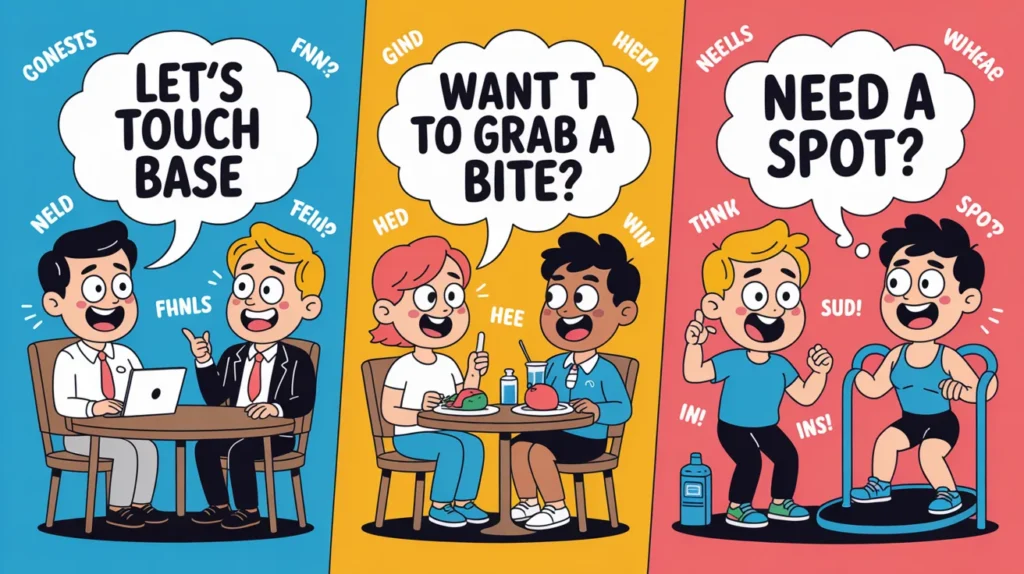
• “Let’s circle back and touch base” – Business communication or romantic coordination? This meeting could go either way, honestly.
• “I need someone who can really execute” – Job performance or medieval punishment; your resume better be killer either way.
• “We need to drill down into this issue” – Deep analysis or construction project euphemism; getting to the bottom of things, literally.
• “I’m looking for someone with hands-on experience” – Practical skills or something much more tactile; the job description just got interesting.
• “Can you handle multiple projects at once?” – Multitasking ability or bedroom prowess; time management has never sounded so spicy.
• “We need to penetrate this market segment” – Business strategy or aggressive invasion; market entry sounds wildly inappropriate now.
• “I work well under pressure” – Stress management or physical positioning preferences; interviews just became awkward.
• “Let’s table this discussion” – Postpone the meeting or furniture-based activities; either way, something’s getting laid out.
• “I’m a firm believer in team bonding” – Collaboration enthusiasm or suggesting after-work activities; trust falls have never been the same.
• “We need to pump up these numbers” – Increase metrics or inflate something else entirely; growth strategies sound different in context.
🍑 Food-Related Double Meanings: Eating Your Words
Food vocabulary is surprisingly sexy once you start paying attention. From fruit emojis that mean absolutely nothing about produce to cooking instructions that sound like romance novel directions, the culinary world serves up innuendo with every dish. Restaurants unknowingly create suggestive menus, recipe instructions read like passion scene stage directions, and grocery shopping becomes an exercise in keeping a straight face.
• “Do you want to split my taco?” – Sharing Mexican food or something entirely different; suddenly lunch invitations require clarification.
• “I like my buns buttered” – Bread preferences or backside appreciation; the bakery aisle got real complicated.
• “She’s a real hot dog” – Compliment about someone attractive or actual sausage discussion; cookouts have layers now.
• “Let me toss your salad” – Helpful kitchen assistance or… definitely not salad; dinner prep conversations require witnesses.
• “These melons are ripe” – Fruit selection or chest commentary; produce shopping demands careful word choice.
• “Want to lick the spoon?” – Baking tradition or flirtatious offer; cooking shows just became rated R.
• “I’ll stuff your turkey” – Thanksgiving preparation or holiday proposition; family dinners need new phrasing.
• “That’s one juicy peach” – Fruit quality assessment or emoji-era anatomy reference; Georgia’s state fruit has been forever changed.
• “Let me cream your corn” – Side dish preparation or disturbing cooking methodology; Thanksgiving sides sound wrong now.
• “I knead that dough” – Bread-making necessity or desperate financial situation; bakers have it rough either way.
• “Cherry on top” – Dessert finishing touch or virginity reference; ice cream sundaes carry hidden meaning.
• “I’d like to eat your cookie” – Sweet treat request or pickup line from hell; Girl Scout season got awkward fast.
🏋️ Fitness & Gym Double Entendres: Working Out the Kinks
Gyms are unintentional comedy clubs where every instruction sounds like it escaped from a different kind of workout video. Personal trainers accidentally create innuendo with every rep count, yoga instructors guide students into “positions,” and gym equipment names sound like they were designed by comedians. The fitness industry has normalized phrases that would make any non-gym-goer blush.
• “Feel the burn” – Muscle engagement or STD symptom; either way, hydration is important.
• “Let’s work on your thrusts” – Hip exercise or bedroom technique; pelvic floor exercises sound suspicious.
• “I need a good spotter” – Weightlifting safety or someone to watch your form closely; trust issues in the squat rack.
• “Time to engage your core” – Abdominal activation or emotional availability; stability comes from within, apparently.
• “Can you help me with my form?” – Exercise technique or body appreciation; personal training just got personal.
• “I’m really into CrossFit” – Workout preference or clothing fetish; either way, you’re intense about it.
• “Let’s do some hip thrusts” – Glute exercise or dance floor moves; Bret Contreras accidentally created innuendo gold.
• “I need to loosen up before we start” – Stretching routine or anxiety management; warmups are crucial for multiple reasons.
• “That’s a really good pump” – Blood flow to muscles or… inflation enthusiasm; bodybuilders have their own language.
• “Let’s work on flexibility together” – Stretching session or relationship negotiation; yoga partnerships require clear communication.
• “I love doing it doggy style” – Downward dog yoga pose or… definitely not yoga; namaste away from that phrasing.
• “Time for some deep squats” – Leg exercise or philosophical commitment; getting low has multiple interpretations.
Read more about: 135+ Charcuterie Puns & Jokes: A Board of Laughs
🎮 Gaming & Tech Double Meanings: Leveling Up the Innuendo
The gaming world and tech industry accidentally created a treasure trove of double entendres that make every livestream a potential comedy show. From “joystick” to “dongles,” tech terminology sounds like it was invented by twelve-year-olds snickering in the back of class. Gamers have normalized phrases that would make their grandparents clutch their pearls, and tech support calls become unintentional adult hotlines.
• “I’m really good with my joystick” – Gaming prowess or… vintage controller enthusiasm; arcade skills or bedroom skills, you decide.
• “Need help plugging in your dongle?” – Tech support or world’s worst pickup line; IT departments hear this daily.
• “Let’s go into private mode” – Incognito browsing or intimate setting; browser history and relationship history overlap.
• “My hard drive is full” – Storage capacity or emotional burden; either way, time for an upgrade.
• “I’ve got a solid state” – SSD technology or physical condition description; computer components sound inappropriate.
• “Want to sync up?” – Data transfer or romantic coordination; Bluetooth pairing takes on new meaning.
• “I’m really into mounting” – Installing hardware or horseback riding… or other activities; tech installation got weird.
• “My RAM needs upgrading” – Computer memory or astrological livestock; either way, performance is lacking.
• “Let’s do a backdoor entry” – Network security or… security breach of another kind; hackers have interesting terminology.
• “I need to blow into the cartridge” – Nintendo nostalgia or retro gaming ritual; the 90s were unintentionally hilarious.
• “Time to insert the disk” – Software installation or medical procedure; floppy disks meant something entirely different.
• “My controller is vibrating” – Haptic feedback or exciting gaming moment; rumble packs changed everything in 1997.
🚗 Transportation & Travel Innuendos: Riding in Style
Travel vocabulary is suspiciously loaded with double meanings that make every road trip announcement sound like a proposition. From “riding” to “mounting,” transportation terminology seems designed to make teenagers giggle. Airlines, car manufacturers, and public transit systems all accidentally contribute to the innuendo economy with their perfectly innocent phrasing.
• “Want to go for a ride?” – Transportation offer or carnival enthusiasm; hitchhiking has never sounded so suggestive.
• “I’ll drive, you just ride” – Carpooling arrangement or power dynamic discussion; shotgun has multiple meanings now.
• “Let’s check under the hood” – Car maintenance or anatomical inspection; mechanics have the best accidental phrases.
• “Time to pump some gas” – Refueling necessity or digestive situation; road trips are full of uncomfortable moments.
• “My stick shift is really smooth” – Manual transmission pride or… other mechanical skills; standard transmission sounds standard-ly inappropriate.
• “Need help mounting your bike?” – Cycling assistance or equestrian aid; getting on top of things requires balance.
• “I love riding with the top down” – Convertible enthusiasm or exhibitionism; wind in your hair or just wind.
• “We’re entering the tunnel now” – Infrastructure navigation or metaphorical journey; GPS just gave interesting directions.
• “All aboard!” – Train departure or invitation to participate; Thomas the Tank Engine never sounded so scandalous.
• “I need someone to help me parallel park” – Driving assistance or coordination exercise; tight spaces require good communication.
• “My rear end needs attention” – Car maintenance or personal grooming; body work takes on dual meaning.
• “Let’s cruise together” – Travel companionship or nautical romance; setting sail into innuendo waters.
🎵 Music & Performance Double Entendres: Playing All the Right Notes
The music industry thrives on double meanings, where artists sneak suggestive lyrics past radio censors using clever wordplay. From classical compositions to modern hip-hop, musical terminology provides endless opportunities for innuendo. Concert announcements, band practice, and music lessons all become accidentally hilarious when you’re thinking with your gutter brain.
• “I’m really good with my tongue on the flute” – Woodwind technique or impressive skill demonstration; band camp stories just got interesting.
• “Let me finger your instrument” – Helping with valve placement or inappropriate touching; music lessons need better supervision.
• “I need to blow harder” – Brass instrument advice or performance enhancement; the orchestra pit has secrets.
• “Time to tickle the ivories” – Piano playing or elephant-related activities; either way, fingers are involved.
• “Let’s jam together” – Musical collaboration or breakfast enthusiasm; band practice or preserves, you choose.
• “I love a good organ” – Church music appreciation or biology interest; cathedrals have the best… acoustics.
• “Pluck my strings” – Harp instruction or painful hair removal; musicians and beauticians share vocabulary.
• “Let’s make some noise” – Performance encouragement or complaint-generating activities; volume control is important in multiple contexts.
• “I need to practice my fingering” – Musical technique or dexterity training; conservatory students heard this constantly.
• “Want to see my wood section?” – Orchestra tour or lumber yard visit; symphonies have interesting departments.
• “Time to hit that high note” – Vocal achievement or recreational drug reference; opera singers and stoners unite.
Related: 99+ Tropical Jokes & Puns: You’re Gonna Coco-nut!
❓ FAQs About Double Meaning Phrases
What’s the difference between a double entendre and a pun?
A pun plays on similar-sounding words or multiple meanings for humor (“I’m reading about anti-gravity—can’t put it down”), while a double entendre specifically has one innocent meaning and one suggestive or hidden meaning. All double entendres involve wordplay, but not all puns are double entendres.
Are double meaning phrases appropriate for professional settings?
It depends on your workplace culture and relationship with colleagues. Generally, stick to mild wordplay in professional contexts and save racier material for friends. If you wouldn’t say it in front of HR, don’t say it at work—no matter how funny you think it is.
How do I respond if I accidentally use a double entendre?
Own it with humor! A quick “That came out wrong” or “Phrasing!” acknowledgment diffuses tension. Most people appreciate self-awareness more than awkward backpedaling. Sometimes the best move is to lean into the laugh and move on.
Why are double meanings so common in music lyrics?
Artists use double entendres to pass radio censorship while still conveying adult themes. It’s creative rebellion—technically innocent enough for airplay but loaded with subtext for those who “get it.” Plus, it makes lyrics more interesting and replayable.
Can learning about double meanings help with language learning?
Absolutely! Understanding idioms, slang, and wordplay demonstrates advanced language comprehension. However, be cautious using them as a non-native speaker—timing and context are crucial, and what’s funny in one culture might be offensive in another.
What era popularized double entendres in entertainment?
While they’ve existed for centuries, the 1960s-1980s golden age of innuendo in TV and film (Benny Hill, Carry On films, Three’s Company) really brought them mainstream. Modern shows continue the tradition with more sophisticated approaches.
🎉 Conclusion: Share Your Favorites!
Language is humanity’s greatest playground, and double meanings are the swing set where everyone wants to play. From Shakespeare’s clever quips to your coworker’s “accidental” innuendo in this morning’s meeting, these linguistic gems remind us that words are wonderfully flexible tools for humor, connection, and creative expression.
Keep your mind in the gutter and your wordplay sharp, folks. Language is too much fun to take seriously! 😉
Which phrase made you laugh the hardest? Vote in the comments and tell us why!
Related: 120+ July Puns & July Jokes for Sizzling Summer Laughs
